< Home
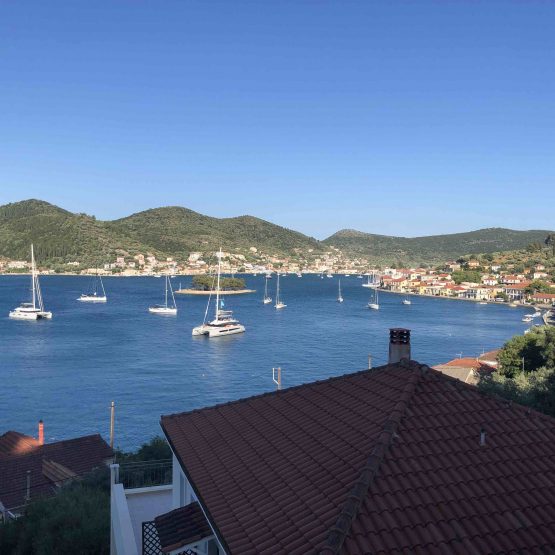
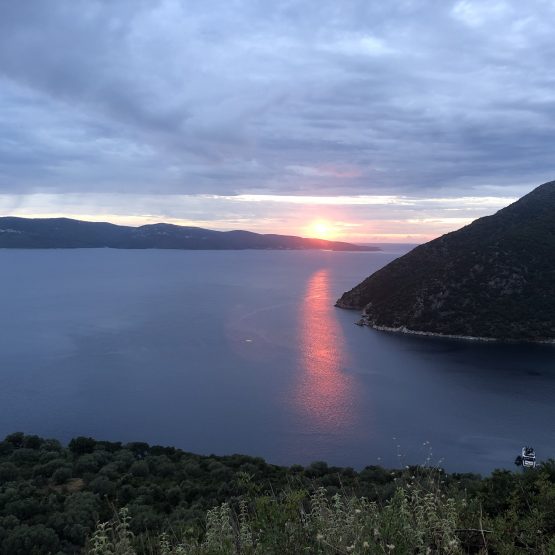
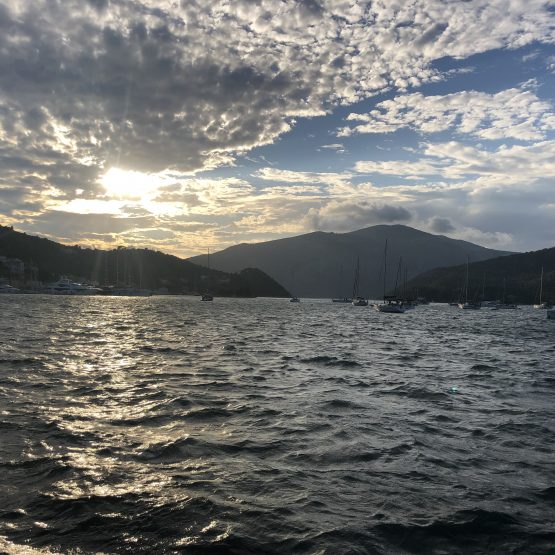
One of my favourite things in the world to do
To grab a gyro at Sábbas and walk around Plaka. To walk the coast of Carthage from the Corniche of La Marsa to the roundabout of Sidi Bou Saïd. To drink tea in Üsküdar, have lunch in Kadıköy and walk the streets of Beyoğlu. To eat paella in Alicante. To sail in the Golfe de Saint-Tropez. To séjour for as many weeks as one can in Montpellier. To visit Lebanon and Crete more. To one day meet a professor friend in the mountains of Cyprus. To arrange for a Tunisian family to have their young girl, for one time, ride in a limousine. To pay for another Tunisian woman, who cleans everyday, to learn to read the Arabic script. To pay for an Athenian woman’s law school. And to sail into Ithaca.
A ligo of olive oil
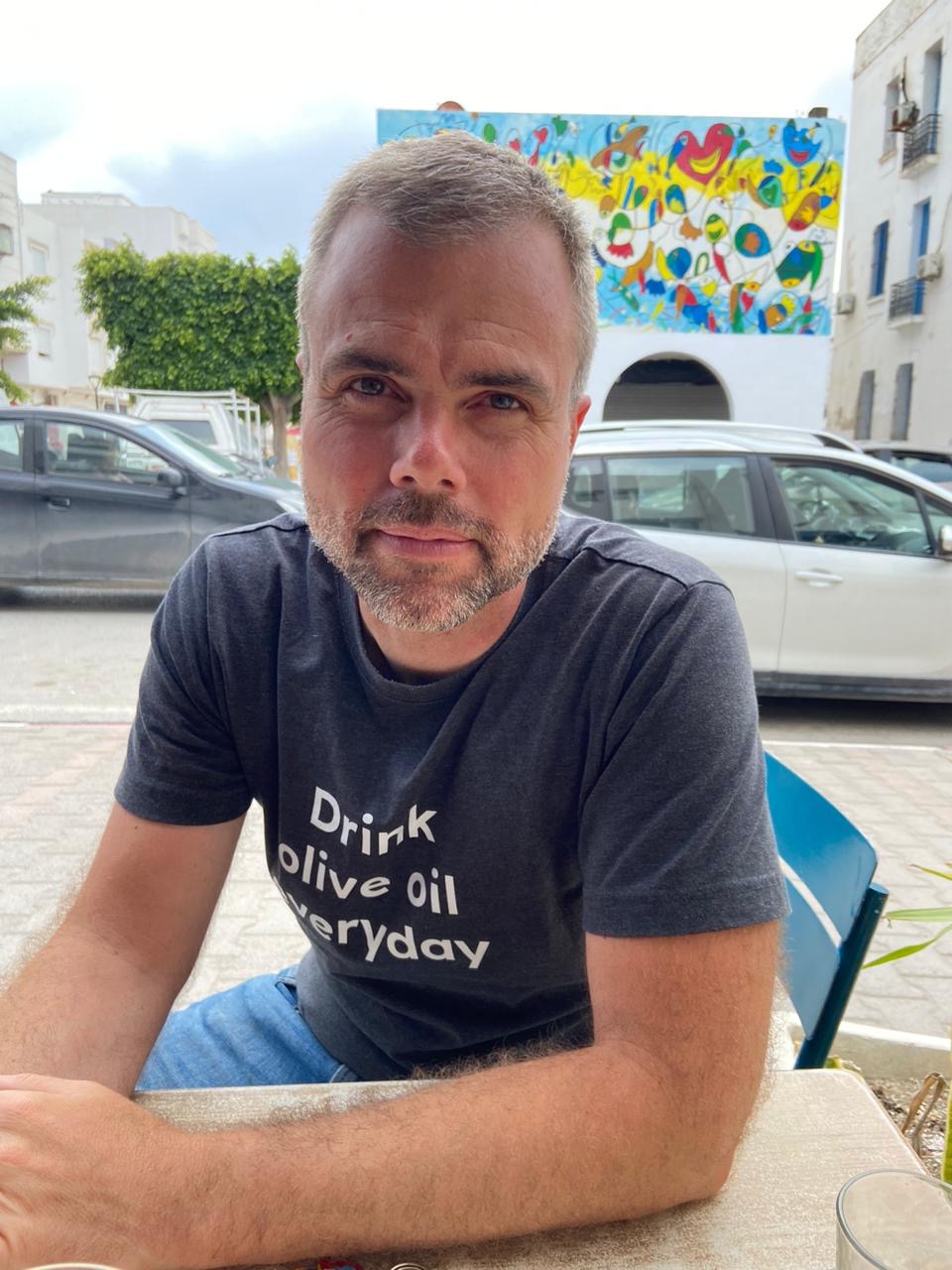
Daily, I drink about 40ml of Extra Virgin Olive Oil. When pouring I tend to pour either in competition-grade evoo glasses (depicted in the video below) or a wine glass. And I always try and pour about 5ml. (This appears to be about the perfect amount for one sitting) Because this is premium or world-class olive oil being poured for sipping, it has never felt quite right to call this amount “about a teaspoon” or something like that. So, instead, last year, I began calling this portion of olive oil a Ligo. In Greek, Ligo / Λίγο means “Little” or “A little”. So the idea is to pour a ligo of olive oil (pour a “little” olive oil) when preparing to sip. In the video below you can see me pouring ligos of Extra Virgin Olive Oil at a past EVOO Meet-up in Alicante, Spain.
Walking in fields
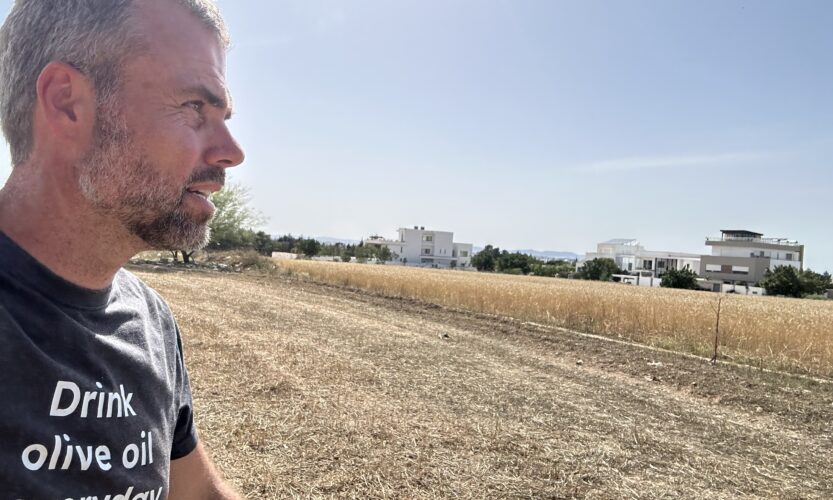
I was born in London, Canada, and raised in St. Thomas. Southwestern Ontario is agriculturally generous—Endless acres of cropland. As a child, when my parents used to drive from St. Thomas to London, I used to look out the window at the long fields that stretched over crests or into the horizon. I used to think–words that I can only summarize at my age now–how simple and joyous life would be to just walk in fields. Now I walk in fields all through the Mediterranean. And how simple and joyous life is.
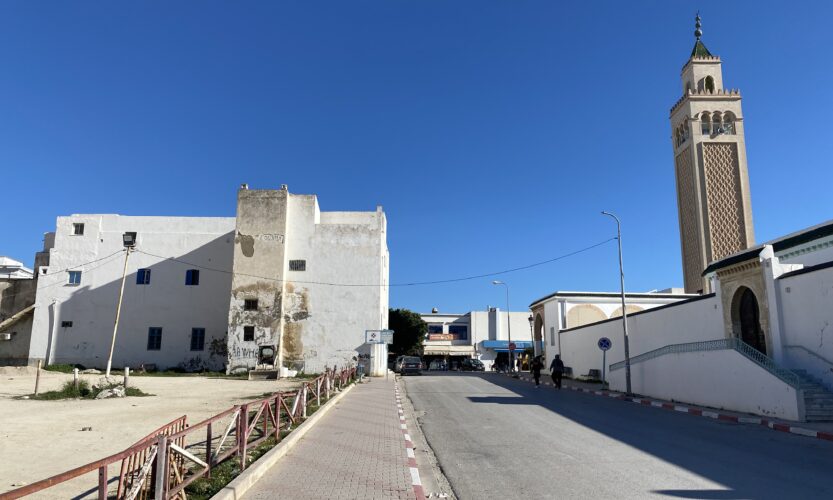
The feature image is from El Marsa, Tunisia, in 2024.
Coast of Carthage
Carthage was once one of the prominent Mediterranean superpowers. Today it’s still a municipality in the conurbation of Tunis, the capital of Tunisia, and is where the presidential palatial buildings are located. But historically Carthage was much more vast covering this entire region of North Africa and even demarcating the southeastern region of the Iberian peninsula. (which is where present day Spain is)
For the purposes of economic development, which includes generating more tourist activities, the Country of Tunisia should formally demarcate and label the region from the municipality of Gammarth along the coast east and south all the way to La Goulette as the Coast of Carthage. It will then be proper for any residences, hotels, restaurants, and the like, to refer to their locations as being within the Coast of Carthage. Progressive economic development activities should continue in this region which should have a reasonable waterfall effect more broadly on Tunisia.
The areas / municipalities that should be in the Coast of Carthage are (west to east): Gammarth, La Marsa, Sidi Dhrif, Sidi Bou Saïd, La Goulette, and any other area of municipality or rural area not in this list but naturally situated along this littoral area.
As the sun set
At sunset, Tom walked down the promenade. He approached the end and came to the other balustrade divided by the stairwell that enclosed the lightly littered sward where the mother dog raised her pups. He had, knowingly, a false anticipation that the mother dog and her last pup would be there. He wanted to see the mother with the pacific eyes, her pup teething at her belly, rolling playfully down the hill, bouncing at empty water bottles, and prancing around joyously with nothing but a banana peel in its mouth. But Tom knew it was wishful thinking. He approached the balustrade, gripped his hands on the rail, and peered over into the enclosure. There was nothing. The region lay bare of life. He stared at the area for some time. The water bottle, banana peel, and the black shawl that the pup once tugged away from behind the palm tree in the corner were absent too. The sun set on Tunisia as it always does. Another day was over.
The morning of a new year in La Marsa, Tunisia
The morning was brisk, the sun was out, and the sky was clear. A man walks across a road holding a black plastic bag full of hard but unknown goods. A woman wearing a hijab and jebba enters the back of a parked yellow taxi; the taxi’s dashboard light toggles from red to green. Two university-aged boys walk side-by-side northward up the street. The convenience stand was open—early in the morning: a column of French and Arabic newspapers lay stacked on display; the stand’s entrance door jarred; its attendant stands on the door’s sill talking on his mobile phone. A middle-aged man wearing a taqiyah sits on a concrete slab at the entrance of a park across from the neighbourhood’s mosque: He fetches a cigarette out of a pocket with one hand, and a lighter out of a different pocket with the other. Two adult grand-sized German Shepherds walk alongside each other excitedly exploring the environs: Their collars are the only indication of proprietorship. Their pedigree explains the likelihood that a gate was left accidentally, or purposefully, open. As the traveller walks up the veranda steps of a café, a superintendent at a nearby building exits with a cup of coffee in hand, ostensibly, having not paid for it. Another man supporting himself with crutches soon exits with a coffee in hand too. The string of benefaction ended with a fourth man: This one, a daily city worker with a munificent heart. Predictably, his request for alms would have been granted, but his timing didn’t pan out this morning: The barista was spent by this point and explained in an exasperated way that he couldn’t keep giving out coffee gratis all morning. Crestfallen, and not understanding the sincerity of the barista’s words, the worker walked a block away and complained with much gesticulation to another building superintendent who regularly, too, requests alms. The two would be joined by a third man and talk for some while. In the nearby Saf Saf plaza, five men sit in a semi-circle in conversation in front of the historic Ben Yedder café. A local old dog known to the men, and the men known to the dog, walks down the adjoining street slowly, its tail wagging side-to-side. In the bosque that’s too large to be a coppice, but too small to be a forest, that bournes La Marsa, a man walks hastily down a trail. Another man wearing a grey sweater and sweat pants and adorning large black ear speakers jogs down another trail. A group of boys ride electric-powered scooters down the street that runs parallel to the bosque. They eventually make their way into the thicket and the mother of one of the boys appears on a bike chaperoning the three. All suddenly stop and become silent as one of the boys falls off his scooter and into a pile of debris. All laugh and continue talking as the boy stands up. “Youssif! Youssif!” the woman shouts as one boy deviates down a different path. He would straggle but eventually follow the group as they carried course through the bosque. “Sbe7 lkher marra okhra!” (Good morning again!) The traveller greeted a parking attendant he regularly sees. “Sbe7 lkher!” the attendant cheerfully shouted back. “Ehbringah!” A local restaurant cook shouted his own name; a regular joke between him and the traveller. “Ebringah, jawouk fesfes!” The traveller congenially vollied back—The Jawouk fesfes is a Tunisian Arabic way of saying, “You are a good man!” But in a hip, and modern kind of way. The chef’s face lit up, as it always does, very pleased with the compliment. A man sits at the side of a street with a jar of honey and a bag full of more. He points to the jar between his feet with one finger in an undulating fashion, says no words, and smiles. “3andi 3sal tawa,” (I currently have honey) the traveller says with a smile back to the man. The man nods and smiles more. The traveller continues his walk down the street, crosses the main throughway in the district, and steps onto the promenade that acts as a corniche to the Mediterranean Sea. The sun was close to its meridian by this point. More people were abound. Football was being played in the valley below the promenaded plateau. The beach was becoming busy. And many splashed in the water; it’s tide clement. It was January 1, 2023 in La Marsa, Tunsia, in North Africa.
(Written on January 1, 2023 in La Marsa, Tunisia)
It’s a proll
“You’re strolling,” The traveller said to his dog. He then looked closer at the gait and recalibrated his statement. “It’s not a stroll and it’s not a prance. It’s a proll.” The traveller smiled. The two continued their walk down Zéphyr’s (زفير) promenade in La Marsa, Tunisia.
The Door Down the Hall
“Bang! Bang! Bang!”
Tom’s eyes shuttered open. It was the wee hours of the morning; Tom was lying on his back in bed. The noise was distinct: a person brazenly banging their knuckles on a neighbour’s door; which one on the floor of Tom’s condominium it was difficult to ascertain but it wasn’t the adjacent one.
This wasn’t the first time this contemptuous interruption had occurred. About a month earlier, on a Saturday night too, Tom endured hearing a neighbour’s door open and shut—likely the same one—repeatedly at odd hours throughout the night. Each episode would begin with the forceful banging on the door.
Before the pandemic, and intermittently when municipal By-Laws would permit during it, his condo would receive a desirous spectrum of short-term rental users: travellers, businesspeople, family members providing auspices to hospitalized loved ones, and those engaging in prostitution.
“Bang! Bang!”
His eyes flickered open again. There was respite between the first interval—enough for Tom to get a little more slumber but not enough to enjoy it.
He contemplated calling Concierge, but the intervals were so intermittent. “What?” He said to himself, “The Concierge would need to show up at the exact moment someone happened to be rebuking their fists on a door?” Mathematically unlikely, he concluded.
Then he heard the door open faintly in the distance. Then it shut. About a half-minute later the door opened again. And then it shut again. There was no fist banging this time, only the opening and the closing of the door.
Tom’s curiosity got the best of him—He got out of bed and dressed himself. “Am I going to walk in on a pimp, a couple ruffians, something else?” He pondered to himself.
He put his moccasins on.
Ever so quietly he opened his door.
Even more quietly he closed his door behind him, being sure to do so with the handle dropped to the bottom as far as it would go so as not to trigger the latch-clipping sound.
The format of the residence-level floors in the high-rise building were all but a complete square if it weren’t for one fraction utilized for the building’s stairwell. The units were situated along the perimeter of the building; the hallway existing one stratum into the structure.
Tom turned the first corner.
He heard the door shut again; the noise palpably louder as he came nearer.
He walked down the next corridor. He heard the door in question open. The sound gaining prominence. He was getting closer. His heart started to beat faster. He was also coming to the floor’s receptacle shoot. He thought rapidly, “Should I be holding a garbage bag? What exactly am I going to do when I see what I’m going to see?” He continued walking.
The door opened again. He came to the next corner. He heard the door close. He rounded the corner.
He stood still. There was nothing. Or no one for that matter. The hallway was bare.
Tom just stood there, inconspicuously silent. The silence went on and Tom continued to stand there in solitary. He heard nothing. The night became toweringly quiet, and time slowed. He stood there, his senses reaching full acuity.
The door made a clicking sound, the door’s handle lowered, and the door creaked open—Tom’s heart began galloping.
Out came a cadaverous looking elderly woman dressed in a full-length white slumber gown. She turned towards Tom, looked directly at him, but kept turning until she faced the door to which she exited from. The door shut behind her. She stood looking at the door. Tom stood speechless, and shocked, at the moment, not breaking his stare. She reached her right hand out, gripped the handle, turned it down, opened the door, and walked back into the unit. The door shut behind her.
Tom didn’t realize this, but his mouth was agape. He stood—his body stiff and his mind fixated on what was happening. “Did she even see him?” He wondered.
The door’s latch made a clicking sound again. The door handle lowered slowly, and the door opened. Out came the cadaverous looking woman again; she turned towards Tom again, but didn’t stop, and completed another turn to face the door. The door closed behind her. She reached her right hand out, gripped the door handle, lowered it, pushed and opened the door again, and re-entered the unit. The door shut behind her again.
That was the last time she would exit her unit that night with Tom standing there. But it wasn’t the last time that he would hear someone brazenly knocking on that door, and it opening, and closing, in the wee hours of the morning.
The woman was a sleepwalker.
British Conversations in the Spanish Mountains
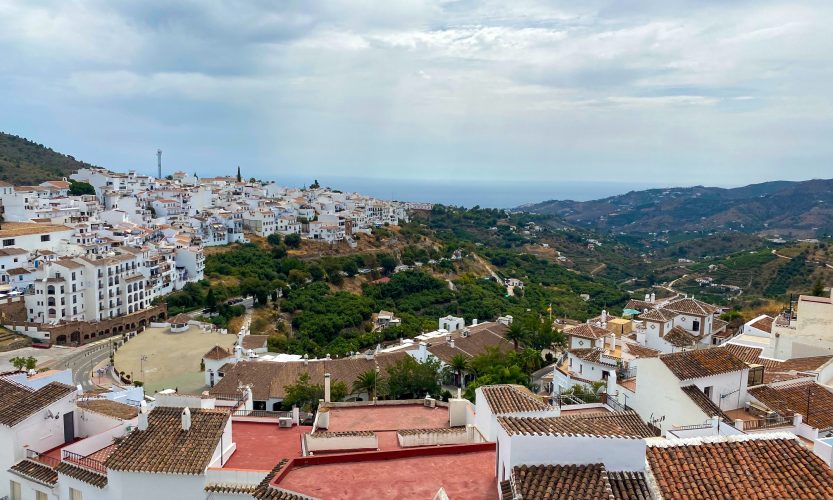
Frigiliana is a little gem of a village located in the mountains in the Costa del Sol, a 15-minute drive north of Nerja, and 45 minutes east of Málaga.
I sat at a café’s patio run by a British woman for 19 years who was reticent at first but gradually opened up.
“How did you get to running a café here?”
“I was raised in Madrid. My father was in film.”
A British couple sat down.
“We’re worried about Brexit,” They explained to me as we conversed. “It split the country. Half are for it; half are against it. It was a lot about immigration.”
The convivial couple was most worried that the U.K. parting from the E.U. would introduce the 90 of 180 rule: That’s rule that citizens of Canada and the United States and certain other countries are under—that is, you may stay no more than 90 days in a 180-day period in the Schengen Area.
The retired couple lives in a quaint coastal city near Almería about an hour’s drive away.
“We decided to do the lock down [COVID-19 travel sanctions] in England.” They said. They returned to Spain in July.
As the pair left, another British couple arrived.
“We live up there,” The wife pointed to the mountains.
“When we visited the place and saw the view, I wanted it,” The wife became effulgent. “I didn’t even care what the home looked like!”
“You can change a home; you can’t change a view.” I said. We all chuckled.
A short while later, a heavy set and bald garrulous British man sat down and began drinking red wine alone waiting for a guest to arrive.
“I sold my business in the U.K. and the plan was to travel the world. I’ve always wanted to see Australia.”
“I was in the courier business for 30 years.” He continued.
“The deliveries around the city were bread and butter,” He said. “Is that a term you’re familiar with—bread and butter?”
He emphasized to me that most of the money in the courier business is made on international shipments.
His plan was to travel to Australia, New Zealand, Canada and the United States. He would meander with no real plans.
He rented an abode in Frigiliana and was waiting to see how COVID-19 would pan out. He liked the region but didn’t want to stay long-term.
“Which of the 42 restaurants do I want to eat and drink too much at today?” He dryly quipped.
When asked if he’d ever do logistics consulting, he was adamant against the thought.
“I’m done with the business!” He emphasized. “I enjoyed it at one point but I’m sick of it now.”
In addition to being known for fantastic views of the horizon, traditionally architected buildings, and colourful puertas (doorways), every year in August, Frigiliana hosts a festival called 3 Cultures where people celebrate Muslims, Christians and Jewish people living harmoniously in society together.
The hero image is of Frigiliana, Andalusia, Spain in the mountains in the Costa del Sol; the sea in the background.
Don’t Cry for Me
If I were to die, don’t cry for me.
Honour me, think of me, but don’t cry for me.
If you must cry that is fine,
But know that it is not for me that you cry,
But for you.
I’m fine dear—I’m no longer here.
Our times must come and go.
Some short; some longer so.
Life is about living.
It’s not about how not to die.
So if I were to die, don’t cry for me.
Cry if you must but when you are done:
Cherish me as an experience,
And live more so.
An elegy by Andrew Schiestel.